Sunday, May 05, 2013

Garden Wars enters fifth year on the lawn

The Austrians were exercised for the first time in a game action and that game was a Garden Wars.

I had two of my sons engaged in the project at one point and the game came off without a hitch.

Much more detail to come in the next posting as the heat from the day and all the activity has made me ready to rest.

Saturday, May 04, 2013

Austrian Napoleonic Uniforms - Cavalry

Austrian Napoleonic Shakos illustrated by the Funkens
The Austrian horse that I set myself to complete in April were done on the 30th.

This post will cover the whole of the process with some summary photos.

After cleaning off the flashing and fixing the errors from the castings, and in this case the Old Glory Austrian Dragoons Charging had separate arms that had to be glued into place, then using green stuff to fill in the gaps.

The minis were then attached to metal fender washers, which is how they get magnetized to the sheet steel bases that I use.  They were then attached to painting sticks, using watered down white glue, this allows me to handle the minis without touching the bases.  I also keep the same poses together, so this makes the detail and other painting go much faster.

As this set had cavalry, I use folded cardboard (cut from cereal boxes) to stick the riders onto.  Again so that I can handle them without touching the actual rider minis, and to permit me to be really sloppy with the watered down paint or inks that I use on my horses.  The riders are painted separately, and shabraques in the case of the Old Glory ones, so that the time and care on faces and equipment can be done.  Then just before the gloss coating they are glued together.

The stages of development of the horse
The stages of development of the riders
For the horse it was the usual, dark brown, to wet white dry-brush, then a color layer - yellow, red or orange in this case = followed by 2 layers of inking.  After the bodies were done I did a white undercoat for the red shabraques.

Then work began in concert, the white was also done on the Old Glory shabraques and any section that was going to later be painted red.  Then the reds were done and block colors of the uniforms, mostly green, though the Cuirassier were done in my usual white pattern of first decreasing shades of blue fading to white highlights.  This same fading blue was done with the many cross-belts.

Finally the yellow was done on the many places of lace and borderings and the lance pennons of the Uhlans.

Riders on the mounts after the gloss coat
As always I do the metallic details last, things like swords, the bits in the horses mouths, the brass on the helmets and buttons (where appropriate).

Then the riders were separated from the cardboard holders and glued onto their mounts.

The whole mass is left overnight to set.

The next day I had them out to gloss coat spray, then that evening, the 30th, I was doing the flocking.

all flocked and ready to go on the magnetic bases
I let the flock setup overnight before setting them on their magnetic bases for the first time.

This force of cavalry and the Austrian Infantry I have worked on this year have yet to take to the tabletop as a force for a game ... with the weather co-operating maybe they can do their first battle as a Garden War?

Friday, April 26, 2013

Engagement at Berlin

This After Action Report is in conjunction with the Campaign of Nations game that is being played via email and web connections with players from the UK, Canada, USA and Australia taking part.

Maréchal Ney, Prince of Moscow at the head of III Corps
 Marshal Ney in command of III Corps and I Cavalry Corps tasked himself the job of storming Berlin.

Charles John, Crown Prince of Sweden (formerly French Marshal Bernadotte) commanded Russian Corps of Voronsov, Cossacks under Czernichev and elements of 12 Corps, the 21st Division of Laptiev.   With the limited forces available, mostly cavalry, Prince Charles John used the low lands and natural water drainage issues in the south of Berlin region to his advantage.  Also the Russians placed a redoubt proximate to the two easiest crossings of the flooded ground so as to support their horsemen in driving off the French attackers.

Ney must have been somewhat confounded on the morning of Aug 19, 1813 (simulated game date) as the day before his cavalry probes had been driven off by artillery fire, they had not reported the ground to be particularly wet, let alone flooded, as it was found to be on the morning of the battle.  Ney set about to find the fastest way across this obstacle and directed his engineers to determine the cause.  Within hours the two dams had been spotted, one of them was at the north end of a dike system, blocking up the bridge crossing over the stream in the area, which caused a flood of water to wash over the east half of the field.  To the west another confluence of little streams to he south of the city wall  had also been dammed up, there was a huge pair of earthwork forts that were manned by townsmen from Berlin that would threaten any who attempted to cross the flat flooded ground to the west, this dam also caused the streams in the center of the field to flood over their banks and turn the normally marshy ground into a deep bog.


The field and defenders positions at start
The Russians were placed holding the south gatehouse of the old city, with the converged Grenadiers stationed in the battlements and controlling the gates under the direction of GM Harpe.  Going to the east (down the photo above) were Cossacks, the redoubt manned by 21st Div under GM Laptiev, then the cavalry of Orurk.  Prince Charles John was in a large multistory building near the city walls and Voronsov was acting as the wing commander out in a suburb of the city.

Russian positions outside Berlin, redoubt in the center
Ney was to drive III Corps to the bridge crossing near the city south gates, while I Cavalry Corps under Général de division Latour-Maubourg was to race down the dike and press on the Russian Cavalry to keep them back or possibly turn their flank and surround the defenders outside the walls!

These plans and adjustments must have taken some time, for the die roll to start the day came up a "5", meaning it was not until 17h00 that Ney was able to start the battle proper.

III Corps formed up and marching with Ney in the lead
Right from the start Oruk's horse were determined to prevent any breakout from the dike road.

Zagriajski's Uhlans engaged French Lancers at the narrow point of the bridge on the north end of the dike road
III Corps in the deployment process at the swollen creek banks before the south gate of Berlin
While Ney and III Corps surged towards the crossing south of the gates, the Russians near the city seemed stunned and stuck in place.

Cossacks did not move at the first urging of Czernichev
Over on the dike, the continued French surging forward threw off the Uhlans and the French pushed clear of the barricades, though blown horses after the fighting made moving forward impossible.

Gobrecht's lancers drive off the Uhlans and move out across the bridge barricades (my new engineering works)
Turn 5 was to have only 2 pulses in it, per the Fast Play Grand Armee rules.  This meant a start of a new turn and some new command dice for both sides.  Ney having 3d6 and Prince Charles only 2d6 of the "Command Dice" (CD's).  This time the die rolls were clearly in Ney's favor, getting 14 of them while Charles only had 6.

The tabletop battlefiled, III Corps is at the top left, while the cavalry is on the dike road bottom left
Both bridgeheads were to see furious action over the next few pulses.

In the east, the dike road had been taken by the Russians, while more of I Cavalry Corps pushed forward led by the 3rd Light Cavalry Chasseurs.  Over near the south gates of Berlin, the French guns of III Corps and all the Divisions were forming into firing positions.

Dike bridge slaughter began

III Corps and Division artillery began firing

Whole field as seen from the western edge
The turn would see the bridgehead on the dike change hands every pulse.

Russians were thrown off the dike bridge by the next brigade of Chassuers
Ney was becoming every more impatient, sending off his field officers to push for crossing the gate bridge before sunset.

Ney grows impatient at the delay on the south bridge
Turn 6 was to see 3 pulses, in all the artillery of both sides did not perform well at all.  Only 1 hit in at least 2 dozen shots.  This permitted the Cossacks to hold up an entire Corps and keep them at bay.

Even point blank fire was innefective against the Cossacks
Turn 7 and again the CDs were in Ney's favor, getting 16 to Prince Charles' 8.

Infuriated by the lack of action at the south bridge, Ney moved his headquarters to within 3" of the point of action - with the intent of personally intervening ...

Ney moved his headquarters into the near front of the battle area.
Over at the dike, the bodies of the dead men and horses were piling up, when a breakthrough by the Chasseurs allowed them to totally overrun the two massed batteries of Orurk, though they were in turn destroyed by Russian Dragoons.

bodies piled up on the dike road
more of 1 Cavalry Corps were pushing on the dike road
Balk's Dragoons deliver a killing blow to French Chasseur that had smashed the Horse Artillery of Orurk's Cavalry Division
Turn 7, pulse 2: tipping point.

Sensing that the Russians could no longer hold back the dike road, nor that the Cossacks could hold off Ney any longer, Prince Charles John Bernadotte gave the order for a covered withdraw to the north for the horse and any guns or foot outside the city walls and into the citadel for the foot troops.  Harpe was to open the south gates of the city to allow his horse guns and what Cossacks could to withdraw from the battle zone.

Ney sensed his moment had come!  Dashing forward to command companies of Grenadier and Voltigeur at the south bridge in person, Ney was determined to rush the city gates and take Berlin!

The table at the last moments of battle, two bridgeheads of blood
Orurk, though given the orders to withdraw, simply refused.  (rolled a 12 for CD)   He then ordered the remaining Hussars to charge headlong into the 1st Light Cavalry Division Chasseurs!

The last charge of Orurk
Over at the south bridge, Ney had pushed through the fleeing horse batteries of his own command, scattered the Cossacks that had put the batteries to flight, then with a company of Grenadiers and some Voltigeurs to clear a path Ney himself led the way to the now open south gates of Berlin.

In the failing light, Ney was last seen over-run by a swarm of Cossacks that were covering the retreat of their fellows and the access into Berlin of a Russian Horse Battery.

Later, that night in Berlin's Citadel, Prince Charles John was hearing from an angry Generallieutenant Count Voronsov about the lackluster performance of the Cossacks and how Orurk had chosen to throw himself and his horse one last time at the French rather than withdraw as ordered.  The interruption came as Cossack Corps commander Generalmajor Czernichev burst into the hall leading a blood soaked horse with the saddle of a Marshal on it, in his hand was Marshal Ney's hat.  Beaming with a smile from ear to ear, he announced, "We have killed Marshal Ney this day!"

While the Citadel could easily hold and support the Russian foot troops and artillery, the question of what to do about the horse and Cossacks remains ...

I Cavalry Corps survivors, 3rd Light Cavalry Division was mauled

III Corps, virtually intact - only Ney is missing in action

Russian survivors that have fled to the Citadel in Berlin


Note to players and readers, the battle was run on Sunday 20 April, I have had some internet connection issues this past week that prevented me from posting before now.

Tuesday, April 16, 2013

A reason ... to do what I do

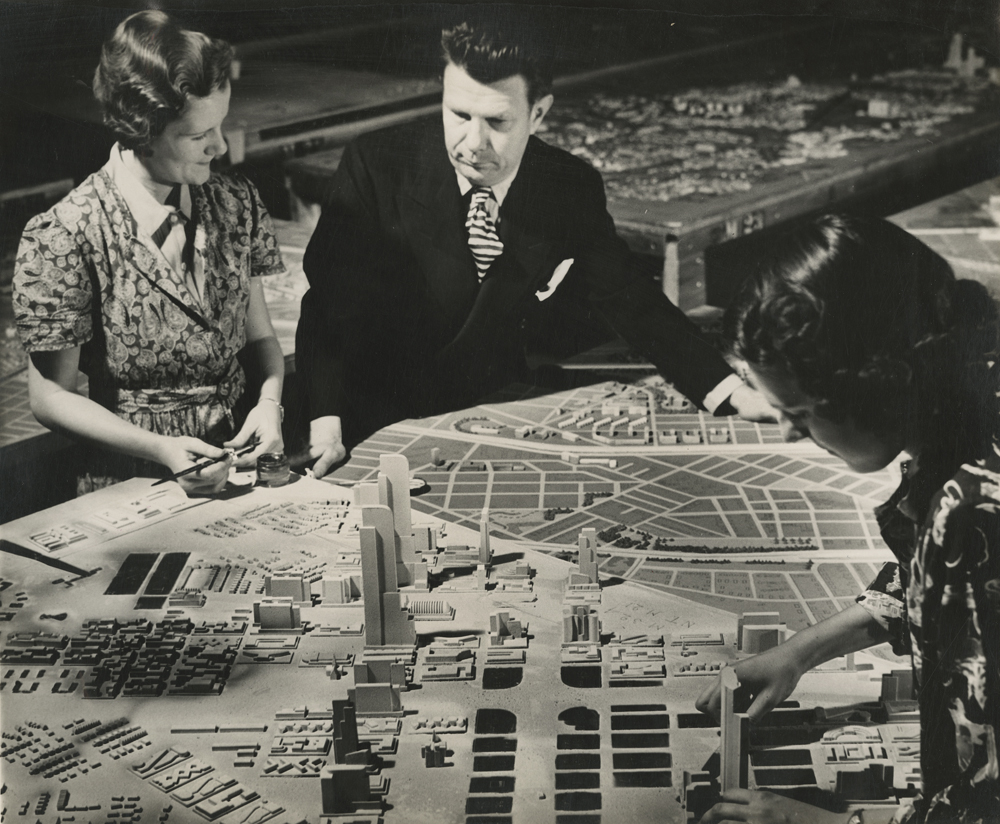
Vintage Wargaming has put out a most interesting article about Norman Bel Geddes.

Norman Bel Geddes
In the article I noted that Geddes is described as being more pacifistic in outlook and thought that by playing at war a real war would appear less appealing...

I certainly agree with this sentiment.

Futurama


His model building skills were put to the test in the 1939 worlds fair.

Sunday, April 14, 2013

Action of Furstenwalde

This After Action Report is in conjunction with the Campaign of Nations game that is being played via email and web connections with players from the UK, Canada, USA and Australia taking part.

Poniatowski at the start of the Furstenwalde action

The battle action called for an advance by Ponitowski's VIII corps into the region to the west of Furstenwalde, some 18 miles east of Berlin. Swedish forces under the overall command of Pozzo di Borgo were to defend against the advance from the east to the city.

The game system chosen was SHAKO (version I) and this permitted the maximum of usage of the forces that I have.  I actually used all the French National painted gunners and foot artillery that I have (first time ever) and got to put out the newly painted Swedish troops, also using all of them.

Ponitowski was on the attack with three foot brigades with 10 battalions of foot in total, 26th Div artillery, VIII Corps artillery (with a total of 5 full batteries) and a brigade of cavalry under Uminski consisting of Ciurassier and two regiments of Krakus.

Pozzo di Borgo had a more humble force of 4 line battalions, 3 irregular or Freiwilliger battalions, two regiments of horse and one full foot battery of artillery.


Table lay out, included three low hills in the center

VIII Corps was laid out, from left to right, Uminski, Grabowski, 26th Artillery, Malachowski, VIII Corps Artillery and Sierawski.  Pozzo chose to put the irregulars on his right, the line force & artillery in the center - using the hill to fire the guns over the heads of his own troops and lumped the Freiwilliger Cavalry and Chevauxleger on his left.

French right, near the farm

VIII Corps Artillery forming a huge gun line

Grabowski on the left of the Polish position
Turn one was to be the pivotal moment.  It turned out the the Swedish force was 2" too close to the advance positioned Polish guns.  In the first salvo exchange the Swedish force lost some 1000 men, with an entire battalion of Freiwilliger foot Jagers fleeing in the first few minutes after taking 200 of their 500 men as casualties.  There were almost no battalions left untouched by the first bombardment.

Swedish response was to charge with their Schonen Carabinierregement into the Polish right, the infantry battalions simply formed square and drove them off.  It was in the recovery from this action that the Schonen Carabinierregement had their troubles, they were to use the next three turns to get back ready for any action, and do this arguing within sight of Pozzo di Borgo.   We postulated that this delay may have come from the nationalism of the time and an unhappiness on the part of the Schonen Carabinierregement (likely the most 'noble' unit on the table for the Swedes) having been sent into a meat grinder by the 'foreign' Italian/Russian commander Pozzo ....

Overall situation, lots of artillery firing in the first 30 mins - one cavalry charge that failed

Swedish center - narry a battalion without casualties in the first 20 mins

Polish center, Malachowski moving off to engage the Swedish center

VIII Corps batteries, dealing out death with every shot

Grabowski's brigade, killing off an entire battalion of Mecklemberg Jagers in the first salvo!

Turn two consisted of more casualties dealt out by Polish gunners and the Mecklenburg-Schwerin Freiwilliger Mounted Jäger under Generalmajor von Fallois being given orders to drive into the Polish rear and strike out for Ponitowski himself.  The Mounted Jäger managed to clear around the first squares, not enough room or time to stop Sierawski from re-deploying two battalions to block their path to the commander or the VIII Corps guns.  The Schonen Carabinierregement continued to fail to rally, the argument was dragging on into an hour of disorder ...

Turn three was the game ending one.

The artillery shattered Generallieutenant Vegesack's center battalions, sending all four of them from the table with some 1100 casualties from artillery fire.  Malachowski's leading battalions put the final nail in the division's coffin with a bayonet charge by two battalions versus one.  The colors were not taken, though some 300 prisoners were.

Over on the Polish right, Mecklenburg-Schwerin Freiwilliger Mounted Jäger under Generalmajor von Fallois chose to charge one last time, the Poles did not form square, rather delivered volleys into the charging horse and surrounded them with another battalion of foot swinging into the melee.  Generalmajor von Fallois was taken prisoner and the Mecklenburg-Schwerin Freiwilliger Mounted Jäger were sent scattering in all directions taking some 80% casualties.

end of turn 3, the Swedes were in full retreat

Malachowski's colums as seen from 26th Div arillery

Grabowski's columns as seen from 26th Div artillery

Schonen Carabinierregement finally getting reformed after nearly 90 mins of disarray

Schonen Carabinierregement would have much to answer for in their lack of participation


When the final tally came for turn three the score was Poniatowski : 7 (needed 5) and Pozzo di Borgo : 0 (needed 7) A ROUT of the Swedes and a solid VICTORY for the Poles for sure.

Swedish remnant

total Polish casting losses: 5; total Swedish: 28; almost all of them from Artillery fire


Saturday, April 13, 2013

Austrian Horse WIP just horse

The base coat and dark undercoat of dark brown (a mixture of Mars Black and Burnt Umber thinned out) has been applied.

Austrian Horse, work in progress, the Old Glory Austrian Dragoons are in the left of this photo
Today also saw the tabletop game out of the action to the west of Furstenwalde, in the Campaign of Nations game.

AAR to come.